Fedir: An Experience That Has to Be Accepted and Lived Through
Fedir Samburskyi, call sign “Shkiper,” speaks about his journey without any attempt to simplify it or frame it through easy formulas. For him, this experience does not add up to a single story that can be briefly retold — it looks more like a sequence of decisions and states that a person has to remain in and continue moving through.
During his service, the priority was always the same: complete the mission and bring the group back in the same number it went out with. Everything else receded into the background. The work shifted depending on the situation: demining, drone operation, reconnaissance, sometimes participation in assault operations. These roles did not separate out neatly — they overlapped, forming an experience he now describes as something singular.
Certain moments that felt ordinary at the time have come to look different in retrospect. Returning to them in his mind, he notes that many situations carried a tension that was not felt as sharply in the moment, but surfaced differently later.
After the injury, life changed pace. There came a need to reassess his own capabilities and come to terms with limitations that had become part of everyday reality. This understanding does not arrive all at once — it enters life gradually, reshaping familiar ideas about oneself.
He names this as the hardest part — not the physical rehabilitation, but the acceptance of what had happened and how it would shape everything that followed.
Treatment and recovery lasted nine months. Over that time, he went through a large number of procedures and surgeries, relearning basic things that had previously required no effort at all. After that, he stood on a prosthesis for the first time.
The search for solutions had begun earlier — practically from the moment it became clear that there was no way around it.
The doctor’s words about the necessity of amputation marked the point after which he had to move quickly: researching options, gathering information, analyzing possibilities, making decisions. It was a process with no ready-made answers, where every step required independent engagement.
His first experience with prosthetics made it clear that this is not a universal solution, but a tool that has to be matched to specific needs. The details mattered — functionality, adaptability, the range of what was possible.
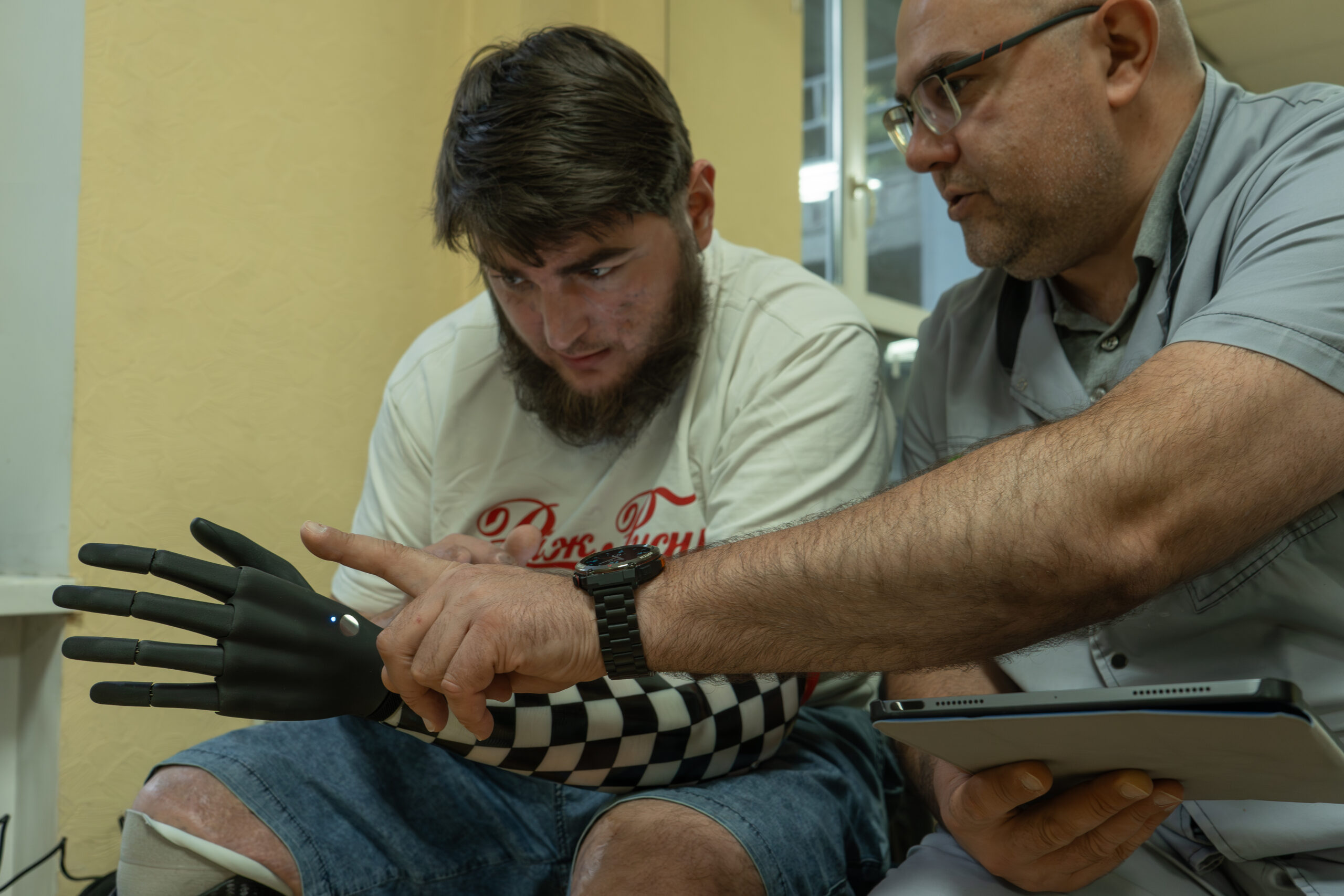
Thanks to funds raised during the PROSTONEBA festival, the opportunity arose to work with a bionic arm prosthesis. That became one part of a larger process that is still ongoing.
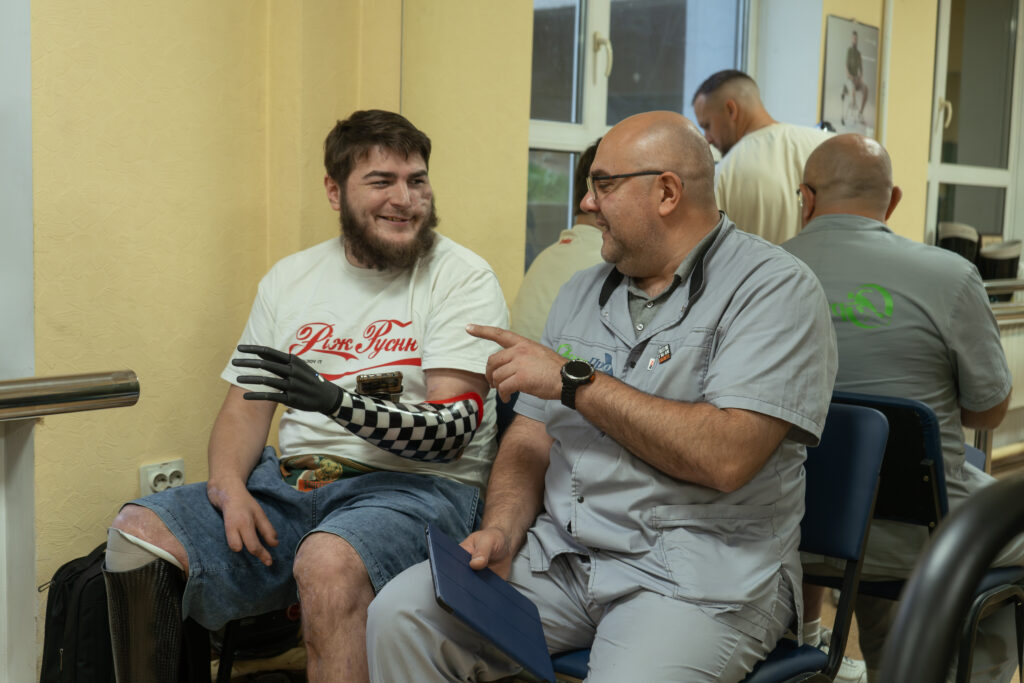
Adapting to a prosthesis takes time and effort. Working with rehabilitation specialists, practicing the same movements repeatedly, gradually adjusting to new capabilities — all of this requires sustained engagement, even when the desire to continue is not there.
It is precisely in these things that a sense of control begins to form.
Even simple actions that were once performed automatically have to be relearned, with new methods and approaches found along the way. It is a process in which results do not come immediately, but accumulate gradually through practice.
The support raised through PROSTONEBA transforms into an opportunity that requires further work and continued engagement. It does not complete the journey — it provides a tool for continuing it.
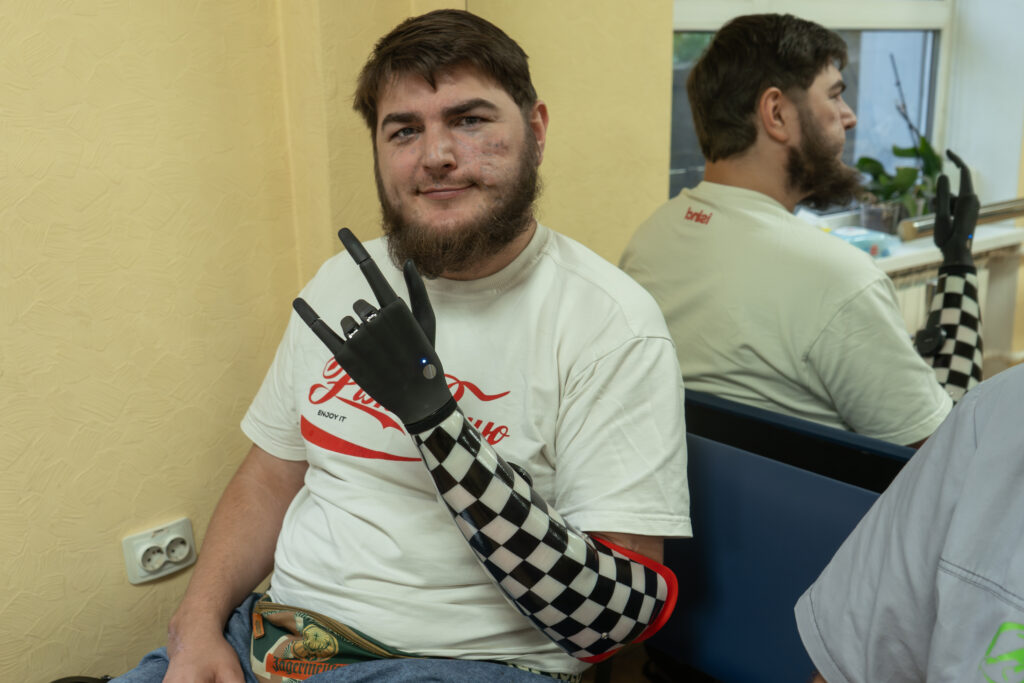
He puts it simply: there is always the option to stop. But there is another option — to keep going. And it is that choice that determines how a person moves forward.
More news